Hybrid Wallet
The Hybrid Wallet gives each supported user profile and fund one experience across digital and crypto wallet rails. Torque keeps each rail's balance, provider record, and transaction history separate, then presents the activity together.
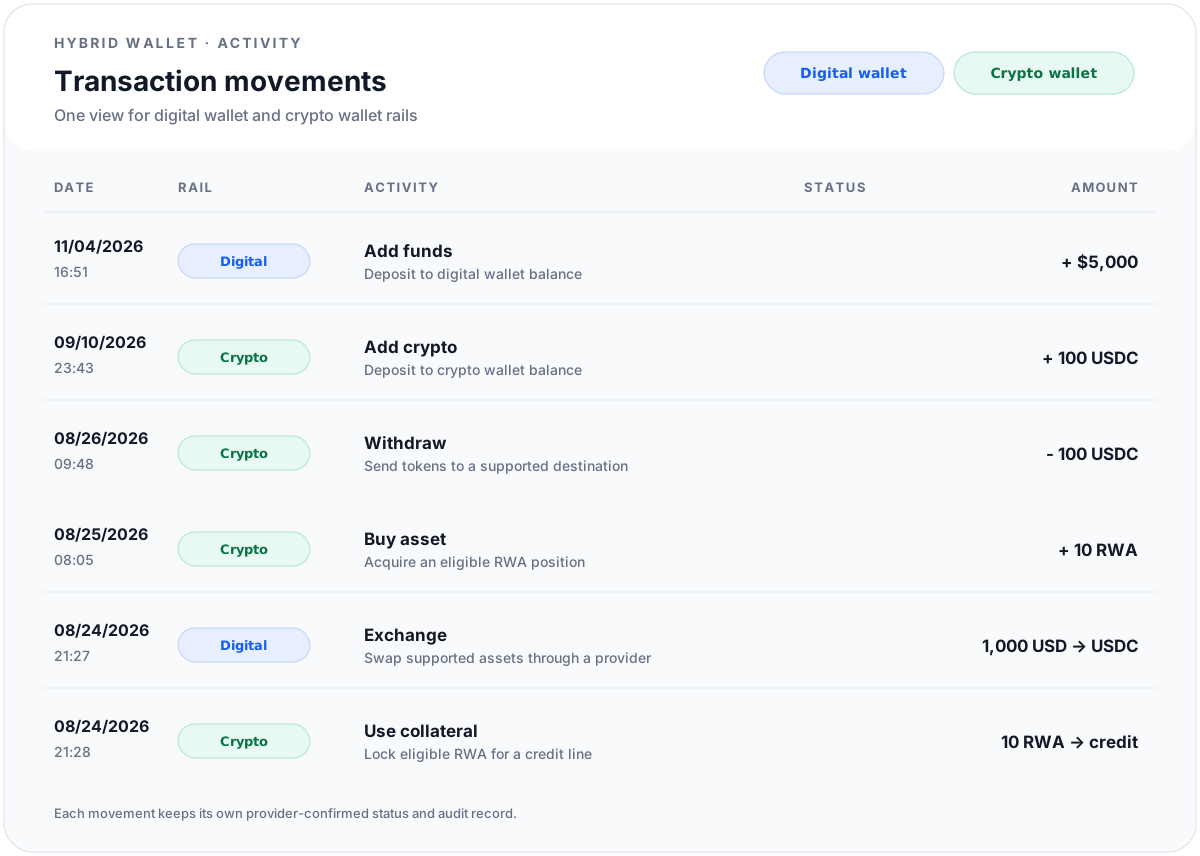
Two rails, one experience
Torque can provision both rails for an eligible user profile or fund. The digital wallet rail holds fiat or other provider-managed balances. The crypto wallet rail holds on-chain assets at a supported address and network. Each rail has its own balance and settlement rules, but users can follow both rails in one wallet experience.
The Wallet model records the digital wallet ledger, including settled and pending amounts, provider references, funding sources, and wallet transactions. The EVM Wallet model records the crypto wallet address, network, token holdings, and on-chain transfer records. These two models describe profile-owned records. Fund provisioning uses dedicated fund wallet and treasury records: the Fund model links a fund wallet, and the fund state lifecycle creates dedicated fiat and crypto wallets during fund approval.
Custom providers on each rail
Torque can connect to custom third-party providers for digital wallets and crypto wallets. A platform can use a different provider for each wallet type. Each provider manages its own balances, asset custody, and final transaction results. Torque keeps wallet ownership and transaction records consistent across providers. Available providers depend on the platform agreement, country or region, provider features, and required security and compliance approval.
What the hybrid wallet does
- Creates both rails: Provision digital and crypto wallet rails for eligible user profiles and funds when those rails are enabled.
- Adds and withdraws funds: Move fiat through linked payment sources and move tokens through supported chains, destinations, and provider workflows.
- Buys assets: Use an available balance to buy eligible supported assets, including configured real-world asset positions.
- Exchanges assets: Exchange supported assets through configured providers or pairs. An exchange is a separate transaction with its own status and evidence.
- Uses collateral: Use eligible holdings as collateral when the deployment enables a supported lending or collateral workflow.
These actions do not create a commingled balance or promise automatic conversion. Asset, chain, provider, jurisdiction, and eligibility rules apply to every action.
Funding and holding boundaries
The Subscribe and fund workflow explains how an Investor starts. Choose an available fund, use an eligible profile you own, and select a supported funding method. The payment or wallet provider then confirms the funding. Funding alone does not create the holding.
After funding, the Issuer accepts the investment. Required signing and pricing follow. The applicable fund-wallet owner signs the deposit fulfillment. The Investor claims the holding when required. These steps complete the holding. The holding workflow describes this process. A redemption returns proceeds. Withdrawing cash from a wallet is a separate action after the proceeds arrive.
Available assets depend on fund terms, Investor eligibility, provider availability, and supported payment or chain paths. The Integrated Wallet Solution explains how wallet services and providers handle these movements.
The Reference map links to the data models, lifecycle documents, and service responsibilities. Provider contracts define the final result for each wallet type.